Is AI helping us finish without learning?
A finished homework assignment usually is seen as a positive. After all, the work is done, the answers are right (hopefully), and it also shows that the person has some level of self-discipline. Combine that with the student getting positive grades, and everyone involved is usually pretty happy.
One of the papers in this week's reading, however, hits us with a Lee Corso, “Not so fast, my friends!” Students were turning in better homework in less time, but when it came time to sit down for exams where AI could not help them, their performance got worse.
What is hard for adults navigating this is that the signs we are predisposed to look for might not actually help us when we are trying to figure out how our kids are doing when it comes to their education. The signs we have learned to look for would be telling us that the child was doing better, and worse, we might even encourage more of whatever was helping.
This week, we look at that study, along with a yearlong follow-up with AI companion users, and interviews with digital artists who have spent years deciding how much of their work to hand over. There is also an older study about navigation that I wanted to include because it complicates this conversation in a useful way. Making a skill less necessary can give someone access to work they could not otherwise do.
The question I want to follow through these stories is what happens once we get used to the help. What do we stop practicing? Who gets less of our time? And where does removing some of the difficulty actually benefit us, and let us do more with our lives?
01 The homework got better before the exams got worse
Working paper • June 2026, revisited in September coverage • Observational school records
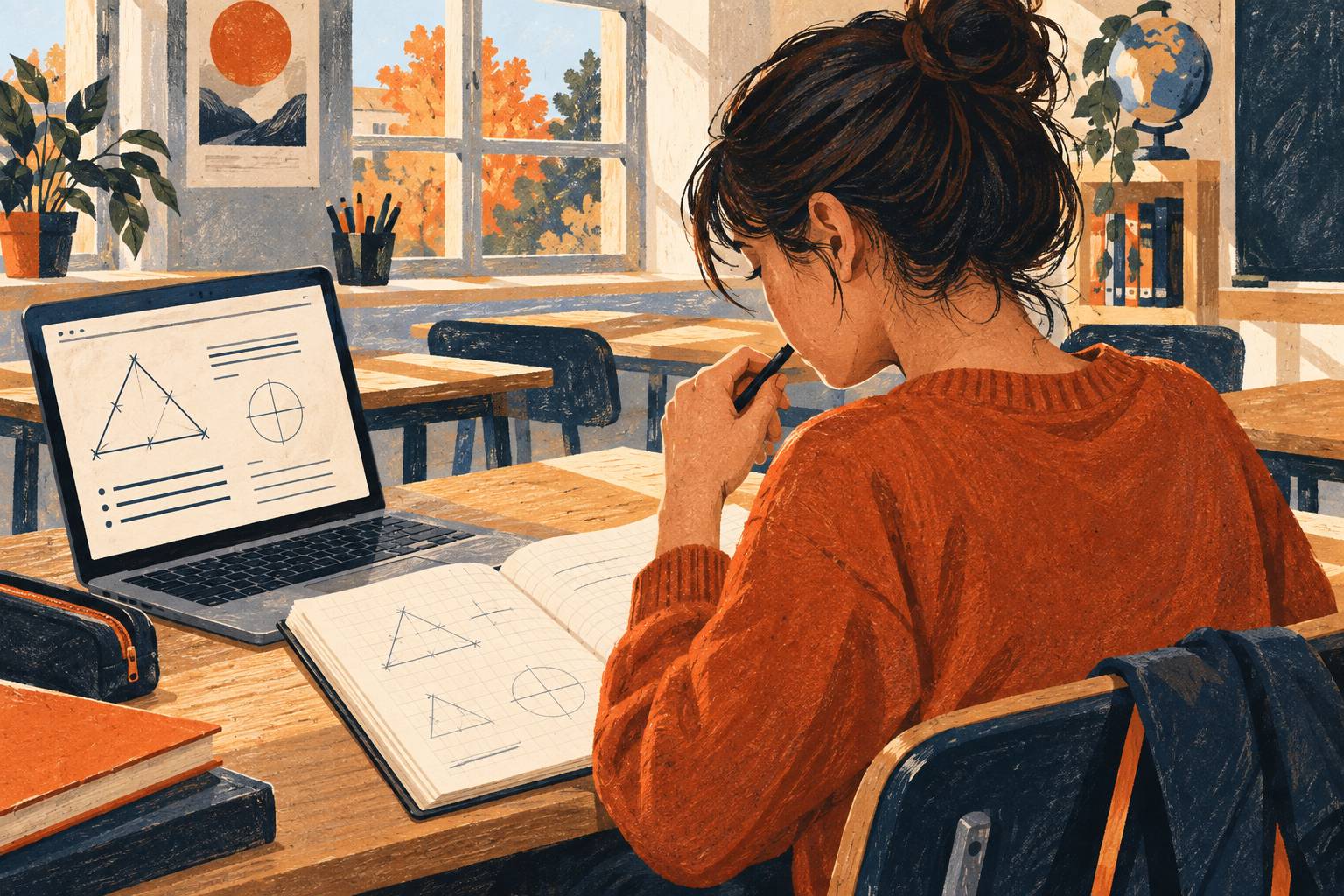
26,811 students followed across 30 months
|
+18%
Homework scores
|
−30%
Homework time
|
−20%
Closed-book exam scores
|
Estimated changes after six months of AI use: homework scores +18%, homework time −30%, closed-book exam scores −20%. Score changes are relative to pre-adoption averages, not percentage-point changes.
Economists David Strömberg, Victor Lei, and Yanhui Wu studied records from students in grades seven through twelve in one county in China. They compared changes among students who had started using generative AI with changes among those who had not yet started.
Within six months, the researchers estimated that homework scores had risen 18 percent and completion time had fallen 30 percent. Monthly closed-book exam scores went the other way, however, falling 20 percent relative to the earlier average. The paper was released in June and received renewed coverage in September. It is a working paper, and students were not randomly assigned to use AI. In my mind, this makes the results worth taking even more seriously.
The researchers also found that the larger learning losses were concentrated among students whose combination of very fast homework and high scores looked consistent with outsourcing the work. Students who continued spending about as much time on homework as nonusers had much smaller losses.
What concerns me is how sensible the shortcut can feel to everyone involved, from the students to the parents and even the teachers. A student wants to finish. A parent doesn’t want to spend all night nagging their kids to do the homework. And as a former teacher, I know they don’t want to keep extending deadlines because more than half the class didn’t turn it in. But also, the teacher loses that evidence that says their student needs help. Until the exam grade comes back, at least.
There is a difference between a child who once knew how to do something and has stopped practicing it, and a child who never had to learn it in the first place, and the latter is what I constantly worry about with AI. If AI becomes part of schoolwork early enough, we may have to get much better at asking the child to explain an answer that already looks correct, and they will have no idea how to explain it.
Read the working paper →
Read the authors' explanation →
02 The conversation that gets more of us
New preprint • September 7 • Two surveys about a year apart

1,182 people at the start • 439 at follow-up
Sustained engagement with AI companions was associated with less in-person interaction and lower well-being. This was not a randomized experiment.
Yutong Zhang and colleagues returned to people they had previously surveyed about using Character.AI. Of the 1,182 people in the original sample, 439 completed a second survey about a year later.
Stronger social engagement with the chatbots tended to continue over time. Sustained engagement was also associated with less time spent interacting with people in person and lower psychological well-being. The researchers' analysis was consistent with reduced human interaction being one part of that relationship.
Before we really worry about this study, I want to call out that there are real limits here to consider. Most of the original participants did not return, the measures relied heavily on what people reported, and two surveys cannot establish the full direction of cause. Loneliness and chatbot use could affect each other. This preprint does not prove that an AI companion makes a person lonely.
Even with those limits, it gets closer to a question I have been begging everyone around me to consider. While I admit a conversation with AI can feel good while it is happening, it is also true that it can take the place of something the person needs from other humans. In the short term, we get our base needs fulfilled but over a long enough timeline, we lose hundreds of lunches, office chats, and catch-ups with friends we would otherwise have had in a non-AI world. What is the cost of that?
And if you have read this newsletter from the beginning, you would know my concern also extends to the person on the other side of the missing interaction. A friend who hears from us less has fewer opportunities to know what is going on. After a while, they may stop asking quite as often. Then reaching out can feel less natural for both people, and the conversation with AI is still available whenever we want it.
That sequence is my concern, and if I had my way I would like future research to follow both people in the relationship. We are getting better at asking how the AI user is doing. I also want to know what happens to the friend that is slowly replaced by this chatbot.
Read the preprint →
03 Deciding which parts of the work are still yours
New preprint • September 8 • Qualitative interviews from 2021 to 2025

17 artists in the original group • Five years of interviews
Thirteen participants completed all five interview waves. The study describes changing experiences, not a measured rate of skill loss.
Yibo Meng, Ruiqi Chen, and colleagues began interviewing a group of Chinese digital painters in 2021. Over the following years, they asked how the artists were using AI and how they understood their own part in the work. Seventeen people joined the study, and thirteen contributed interviews in all five years.
What’s interesting here is that the accounts did not follow one path. Some artists who had initially resisted AI began using it for parts of their work as the tools improved and deadlines pressed. Some kept particular decisions or stages for themselves. Others described fatigue, economic pressure, or growing difficulty explaining where they fit. These are interviews with a small group, not tests showing that artists had become less capable.
The part that interests me is how often the decision had to be made again. Allowing AI to help with a background does not settle what happens when a client expects the next piece to come even faster. Something that began as help with a difficult week can become part of what other people now expect you to deliver, which leads to more AI use, and a cycle of demand with output that is thorough and fast.
Full disclosure, I also cannot put artwork in a newsletter with AI's help and discuss this as if it only concerns somebody else. Those images are AI and they make it easier for me to produce the newsletter I want. That benefit is real, and I will never say AI is not useful.
The study made me think about how much control a person has over the part they decide to keep for themselves, and what they decide to hand over to AI. I can’t draw, so I hand over the artwork, but I love to write so I keep that. A hobbyist can take longer and not use AI because they enjoy doing it. Someone whose rent depends on the next commission may have much less room to make that choice. Telling both people to preserve their creativity can sound reasonable while asking something very different of each of them.
Read the preprint →
04 The help that lets someone do the job
Earlier research worth revisiting • Peer-reviewed • First published September 2025
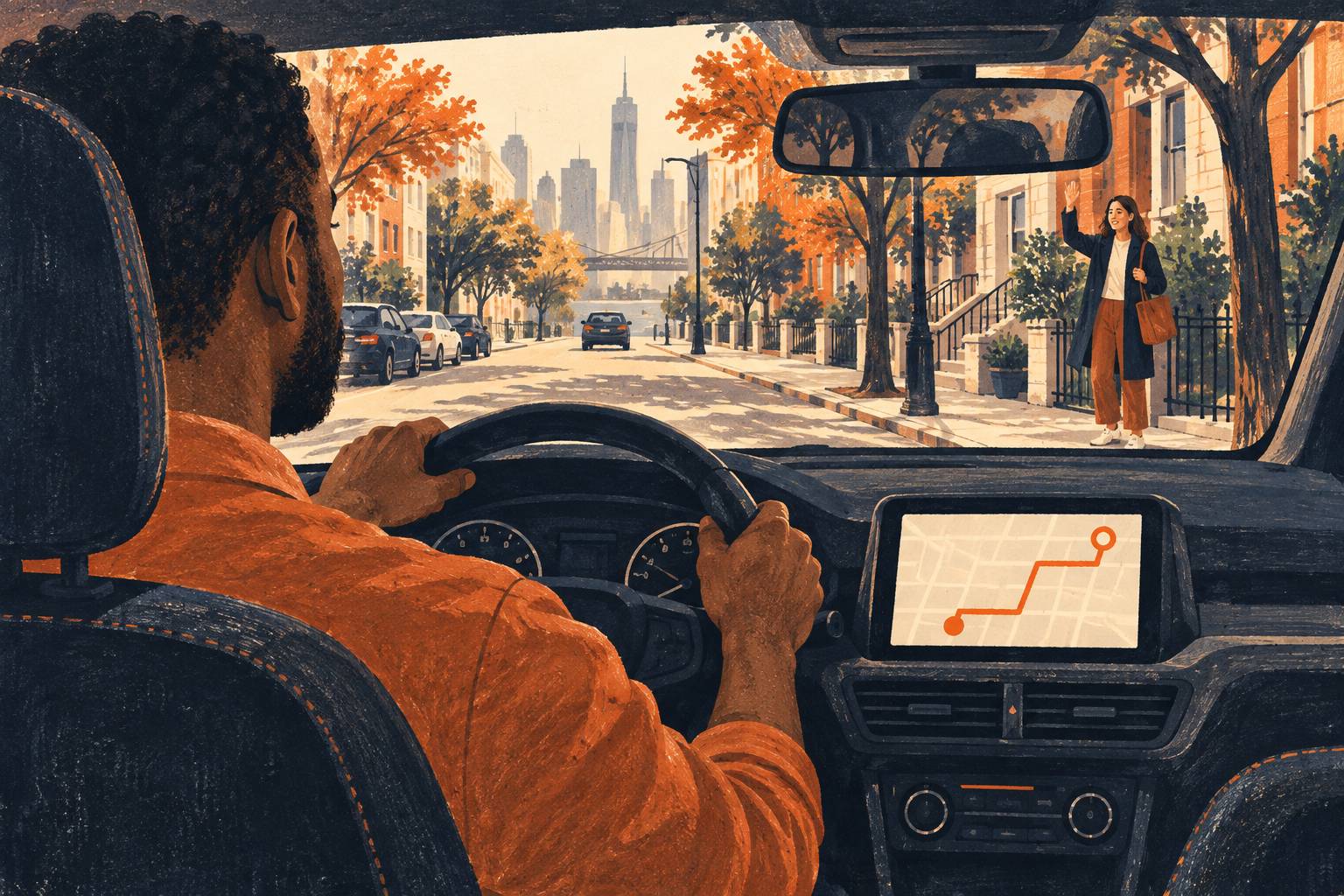
50 drivers in a field experiment
Navigation assistance reduced stress during the driving task, with greater benefits for drivers with less geographic knowledge.
I wanted this older paper in the issue because a discussion about losing skills can too easily overlook people who gain an opportunity when a skill becomes less necessary.
Pinchuan Ong and I. P. L. Png studied navigation technology and ride-hail work in Singapore. Their research included a field experiment with fifty drivers, randomly assigned to driving conditions with or without navigation assistance. The researchers measured stress through both self-reports and heart rate. Drivers with less geographic knowledge benefited more from having the technology available.
A separate experiment asked 709 drivers to choose among work scenarios. Access to navigation increased willingness to work, especially among those with less geographic knowledge. Those were choices in an experiment, not a count of new jobs created. The research concerns map apps, not generative AI, and it did not test whether drivers retained their navigation skills over years.
Still, I think it belongs here. It is easy to say a person should know their way around without a map when that knowledge is optional for how we earn a living. It becomes a different question for someone who can now do a job that used to require knowledge they did not have.
The purpose of the activity tends to matter, at least in my opinion. A student doing homework is supposed to be learning something they can use later. A driver taking a passenger across town has an immediate job to do, and that’s different. We should be able to worry about what happens to independent ability without asking everyone to give up assistance that makes their working day possible. That leaves a harder question about which abilities we still need to practice, and who has the time and support to do it. And with this economy, that might continue to change over time.
Read the study →
Read the research society's summary →
The Reckoning
I do not think most people are deciding which parts of themselves they are willing to lose when they open an AI tool. It’s not a conscious thought right now, just like it wasn’t a conscious thought when we all first started using social media. They are trying to get through something, and open up some assistance without weighing costs way down the road. An assignment is due, a client is waiting, or there is something they need to talk about and nobody is available right then, but AI is.
That is why I keep wanting us to look beyond the moment when the AI does its job. A decision that makes sense tonight can become the way we handle the same situation tomorrow, and after enough repetitions, it may be hard to remember when we last tried it another way. Habits form, and undoing them (as we have seen with social media) becomes more and more difficult over time.
There is also the person who never made that decision but is affected by it anyway. The teacher has less reliable evidence of what the student understands. The friend knows less about our week because we told our issues to a chatbot. The illustrator is asked to justify why the work should take so long, when our AI could do it in a few minutes.
While I want people to be thinking about this daily, I want to be careful about turning that concern into a demand that people make everything harder for themselves. The driver study, in particular, is a good reason to resist that. Some difficulty keeps us from participating at all, and I’d rather have someone try something with AI than never try it at all.
For this week, I am going to start with one task that has become easier for me because of AI and look at if I would know how to do that thing without the tool. Can I explain the answer? Am I still making the decisions? And maybe most importantly, have I interacted with anybody in my life less because I use AI as a tool in this particular case?
Also this week
A few more from this week's reading, with links if you want to go further.
Moral advice that moves when the user pushes
In simulated eldercare dilemmas, Chen and Yao found that GPT-4o-mini's advice changed substantially with framing and user pushback, a preprint about one model's responses rather than evidence of how people actually made care decisions.
Read the preprint →
What counselors learn from a conversation going badly
A paper by Vivian Nguyen and colleagues, accepted for EMNLP 2026, found that how crisis counselors adapted to difficult conversational moments helped predict later improvement, without establishing that difficulty itself caused them to improve.
Read the paper →
The methods an AI keeps recommending
Lorenzo Cardarelli and Roberto Ragno found that two AI models suggested a narrower range of archaeological methods than the literature contained, especially with less guidance, while their analysis of about 119,000 abstracts did not find that diversity in the field had declined.
Read the preprint →
A kitchen machine enters the education argument
Nikol Rummel, Valentina Nachtigall, and Ernesto Panadero use the Thermomix as an analogy for why the learning question depends on what a person does with assistance, in a conceptual paper rather than a new experiment measuring skill loss.
Read the paper →
California adds protections for children using chatbots
Governor Gavin Newsom signed Adam's Law on September 10, adding requirements including independent child-safety audits for companion chatbots, a policy development whose effects on children's well-being still need to be evaluated.
Read the governor's announcement →
What work provides beyond a paycheck
A new review by Stephanie C. Y. Chan and colleagues examines how AI-driven changes to work could affect well-being, including the importance of alternatives to work, the choices people have, and the communities in which those changes happen.
Read the review →
PRACTICE
Try working out the rule before you get the explanation
This week, open Black Box at The Quiet Cost Practice. It is a studio where you get a few observations and have to work out the hidden rule. Make a prediction, choose a test, and see what happens. Getting it wrong gives you something to work with on the next try.
I like this as a place to start because the explanation has not arrived before you have had a chance to form one. There is no timer rushing you toward an answer. Stay with it long enough to be able to say why you changed your mind.
If you would rather start with a game, pick one of the daily games. Give yourself a few minutes to play, then bring that willingness to try back to something you were about to hand to AI. Write your own first attempt before you ask for help.
These are opportunities to practice. We have not established that playing them prevents AI-related skill loss or that a better game score transfers to the rest of life. The reason I am building them is to give us places to keep using abilities that are becoming easier to leave unused.
Go play at The Quiet Cost Practice →
Your turn
Choose one thing AI now helps you finish. What did doing it yourself used to require of you, and which part of that effort do you still want to be able to make? If someone else used to be involved, what has changed for them?
Take five minutes and write about the actual task and the actual person. Then name one small part you will do yourself this week, or one conversation you will bring back to them.
Pass it on
If someone came to mind while you were reading, forward this to them. Reckonings is free and arrives each week. They can subscribe and read the earlier issues at quietcostweekly.com. My longer essays are at At a Cost on Substack.
Subscribe and read earlier issues →
At a Cost →
Michael McNamara
quietcostweekly.com →